
Ayurveda, an ancient Indian system of medicine, categorizes the universe and the human body into five basic elements: Space, Air, Fire, Water, and Earth. These elements combine to form three life forces or doshas (Vata, Pitta, and Kapha) and also manifest as six tastes (rasas) in food: Sweet, Sour, Salty, Pungent, Bitter, and Astringent. Each taste is predominantly composed of two elements, and understanding these combinations is crucial for balancing the doshas and promoting overall well-being.
Here’s a breakdown of the elements and tastes in Ayurveda:
The Five Elements (Pancha Mahabhutas):
- Space (Akasha): Represents emptiness, lightness, and subtlety. It is associated with the sense of sound.
- Air (Vayu): Represents movement, dryness, and lightness. It is associated with the sense of touch.
- Fire (Agni): Represents transformation, heat, and digestion. It is associated with the sense of sight.
- Water (Jala): Represents fluidity, coolness, and lubrication. It is associated with the sense of taste.
- Earth (Prithvi): Represents stability, solidity, and structure. It is associated with the sense of smell.
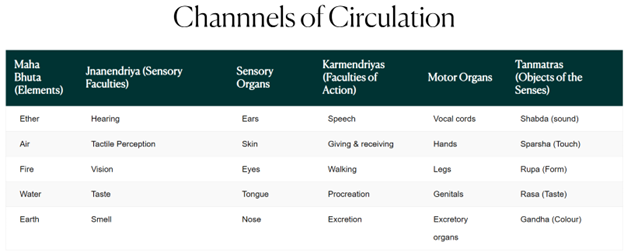
Ayurveda Channels of Circulation
The Six Tastes (Rasa):
- Sweet (Madhura): Predominantly composed of Earth and Water elements. It is nourishing, grounding, and anabolic (builds tissues).
- Sour (Amla): Predominantly composed of Earth and Fire elements. It stimulates digestion and metabolism.
- Salty (Lavana): Predominantly composed of Water and Fire elements. It is essential for fluid balance and electrolyte regulation.
- Pungent (Katu): Predominantly composed of Fire and Air elements. It stimulates digestion and circulation.
- Bitter (Tikta): Predominantly composed of Air and Space elements. It is cleansing and detoxifying.
- Astringent (Kashaya): Predominantly composed of Air and Earth elements. It is drying, constricting, and can reduce inflammation.
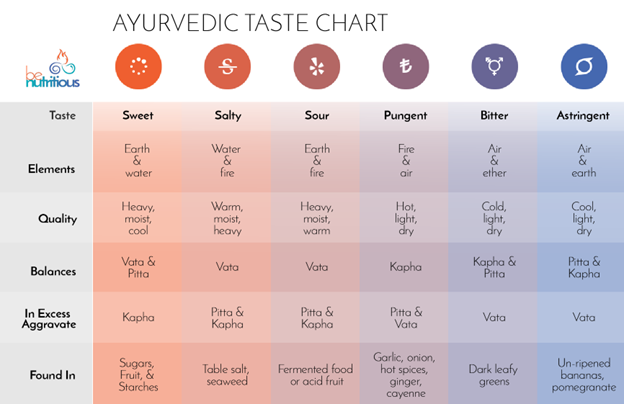
Ayurvedic Tastes Chart
Connection between Elements and Tastes:
- Each taste is a combination of two of the five elements.
- Understanding these combinations helps in choosing foods that balance the doshas and support overall health.
- For example, a Vata-predominant person might benefit from a diet rich in sweet, sour, and salty tastes, while a Kapha-predominant person might need to limit these.
Importance of Taste in Ayurveda:
- Ayurveda emphasizes that consuming all six tastes in a balanced way is crucial for optimal health.
- Each taste has a specific effect on the body, mind, and emotions.
- By understanding the qualities of each taste and their impact on the doshas, individuals can make informed dietary choices to maintain balance and well-being.